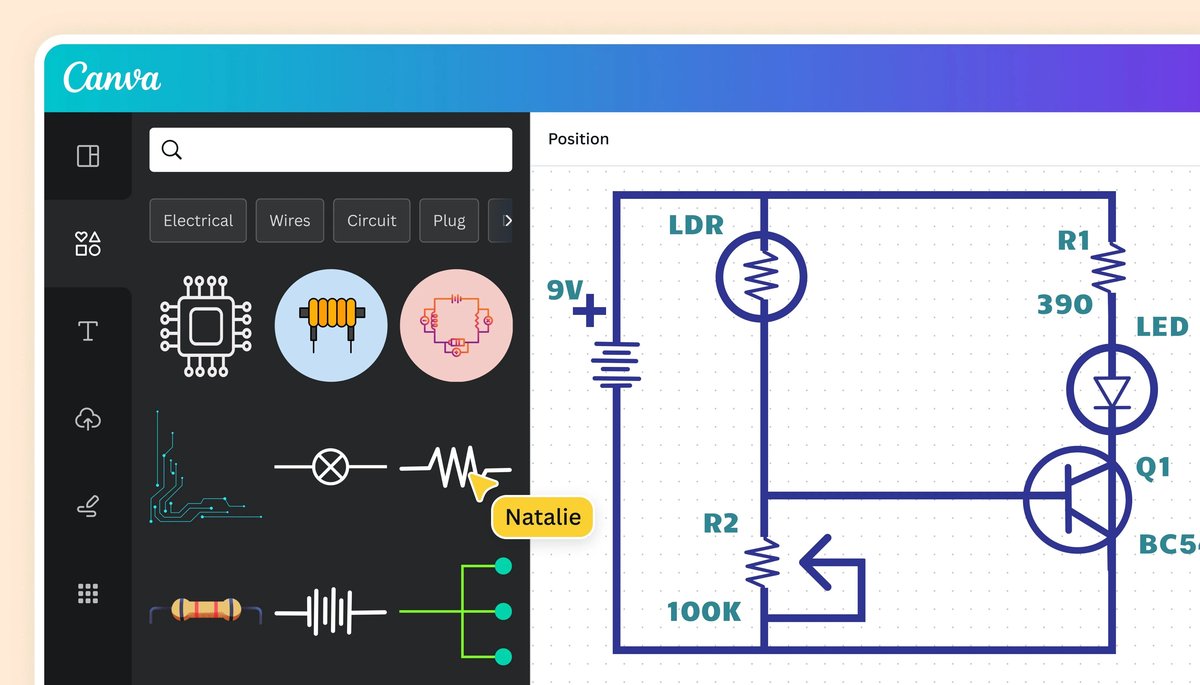
In a world powered by unseen currents, where intricate networks of wires and components bring our devices to life, a silent language governs it all: the circuit diagram. These elegant blueprints are far more than just abstract drawings; they are the indispensable maps that guide the design, repair, and innovation of virtually every electrical system we encounter. Without understanding the fundamental Applications of Circuit Diagrams, you'd be navigating a vast, invisible city with no compass, no guide, and no hope of fixing anything that goes wrong.
From the humble light switch in your home to the sophisticated microchips powering your smartphone, every electrical interaction is meticulously planned and documented in these schematics. They are the universal Rosetta Stone for engineers, technicians, and even curious DIY enthusiasts, enabling clear communication and precise execution across the globe.
At a Glance: Why Circuit Diagrams are Your Electrical Superpower
- Visualize the Invisible: They transform abstract electrical flow into a clear, visual map.
- Speak a Universal Language: Standardized symbols allow anyone in the field to understand complex systems.
- Build with Confidence: Essential for designing new circuits and ensuring they work as intended.
- Fix It Fast: The ultimate troubleshooting tool for diagnosing and repairing electrical faults.
- Innovate Smarter: Crucial for iterating on designs and developing cutting-edge technology.
- Stay Safe: Understanding diagrams helps prevent dangerous wiring mistakes.
Decoding the Electrical Blueprint: What Exactly is a Circuit Diagram?
Think of a circuit diagram as the architectural plan for an electrical system. Just as an architect uses symbols for doors, windows, and walls to illustrate a building's structure, an electrical engineer uses standardized symbols for resistors, capacitors, and power sources to represent a circuit.
Its core purpose is remarkably simple yet profoundly powerful: to visualize the structure and function of circuits, illustrate the path of electricity flow, and clearly show each component's role. This graphical representation strips away the physical clutter of wires and components, allowing you to focus purely on the electrical connections and their functional relationships. This simplicity is precisely why understanding and drawing these diagrams isn't just academic—it's fundamental for both physics students and seasoned professionals tackling real-life electrical work.
The Universal Language: Key Symbols You Need to Know
Before you can read a map, you need to understand its legend. Circuit diagrams use a set of universally accepted symbols, each representing a specific electrical component. Mastering these is your first step to unlocking the world of electrical systems.
| Component | Symbol | Function |
|---|---|---|
| Wire | - | Provides a conductive path for current. |
| Resistor | ~~~ | Restricts the flow of electric current. |
| Cell |  | Supplies electric energy (single power unit). |
| Battery |  | Multiple cells, increases total voltage supplied. |
| Switch (Open) | --/ -- | Interrupts the circuit; no current flows. |
| Switch (Closed) | --- -- | Completes the circuit; current can flow. |
| Bulb (Lamp) | (X) | Glows when current flows through it (load). |
| Ammeter | (A) | Measures electric current in amperes. |
| Voltmeter | (V) | Measures voltage (potential difference) across components. |
| Fuse | ~ - | Prevents excessive current by melting and breaking the circuit. |
| Ground/Earth |  | Indicates connection to ground (common reference point). |
| This concise vocabulary allows complex systems to be described with clarity, regardless of language barriers. |
Bringing Circuits to Life: Understanding Current Flow and Circuit States
A circuit diagram doesn't just show components; it shows how they interact to facilitate the flow of electricity. To truly appreciate its applications, you need to grasp the fundamental concepts of current flow and the various states a circuit can be in.
The Direction of Flow: Electron vs. Conventional Current
When electrons actually move, they travel from the negative terminal to the positive terminal of a power source. This is called electron flow. However, for most circuit diagrams and engineering calculations, we use conventional current, which, by historical convention, is considered to flow from the positive terminal to the negative terminal. It's an important distinction to be aware of, but rest assured, the practical analyses and outcomes are the same regardless of which convention you use, as long as you're consistent.
The Three States of an Electric Circuit
An electric circuit is a closed loop allowing current to flow from a power source, through a load, and back. However, its operational status can change, affecting everything from safety to functionality.
- Closed Circuit: This is the desired state for any operational device. It signifies a complete, uninterrupted path for current to flow from the power source, through the load (like a light bulb or motor), and back to the source. When a circuit is closed, devices operate as intended.
- Open Circuit: An open circuit occurs when there's a break in the electrical path, preventing current from flowing. This could be due to an open switch, a broken wire, or a disconnected component. No current flows, and any devices in the circuit will not operate.
- Short Circuit: A highly dangerous state where two points in a circuit unintentionally connect with very low resistance. This causes an excessive surge of current to bypass the intended load, leading to rapid heating, potential damage to components, and even fires. Protection devices like fuses or circuit breakers are critical to prevent harm in the event of a short circuit. Understanding short circuits through diagrams is key to designing safe systems.
From Concept to Creation: Drawing Your Own Circuit Diagrams
Before you ever connect a wire, sketching a circuit diagram is the safest, most efficient way to plan and troubleshoot. It turns abstract ideas into a tangible plan.
- Identify the Purpose of the Circuit: What do you want it to do? Light an LED? Control a motor? Charge a battery? Clarity here informs all subsequent steps.
- List the Components Required: Based on your purpose, make a comprehensive list of all necessary elements: power source, loads, switches, protective devices, etc.
- Understand and Use Symbols: Refer back to the standard symbols table. Incorrect symbols lead to miscommunication and errors.
- Connect Components Logically: Draw straight lines for wires, connecting components according to your design. Avoid diagonal lines unless absolutely necessary, and ensure all connections are clear.
- Indicate the Current Flow: Use arrows (typically following conventional current: positive to negative) to show the direction of current. This aids understanding and troubleshooting.
- Label Everything Clearly: Label components with their type (e.g., R1 for Resistor 1, S for Switch) and include ratings (e.g., voltage, resistance) if they are critical to the circuit's function.
- Keep It Neat and Scalable: Leave ample space between symbols, avoid overlapping lines where possible, and ensure the diagram is easy to read and modify if needed. A messy diagram is a useless one.
The Power in the Paths: Series, Parallel, and Combination Circuits
The way components are connected significantly impacts how electricity flows and how the circuit behaves. Circuit diagrams clearly illustrate these fundamental configurations.
1. Series Circuits
- Features: All components are connected end-to-end in a single, continuous path. The same current flows through every component, but the voltage is divided among them.
- Analogy: Imagine a single lane road where all cars (current) must pass through the same checkpoints (components). If one checkpoint closes, the entire road is blocked.
- Implications: If any single component in a series circuit fails or breaks, the entire circuit becomes open, and all other components stop working. Think of old Christmas tree lights where one blown bulb would extinguish the entire string.
- Advantages: Simple to design and construct, requires fewer wires.
- Disadvantages: Not ideal for multiple devices, as a single failure cripples the whole system, and voltage drops across each component.
2. Parallel Circuits
- Features: Components are connected across common terminals, providing multiple, independent paths for current. Each component receives the full voltage from the source, while the total current divides among the branches.
- Analogy: A multi-lane highway where cars (current) can take different paths to reach their destination. If one lane is closed, traffic can still flow in others.
- Implications: If one component in a parallel branch fails or breaks, the other branches remain operational and continue to receive power. This is why the lights in your home (and most modern electrical systems) are wired in parallel.
- Advantages: Consistent voltage across components, and the failure of one device does not affect others.
- Disadvantages: Requires more wiring, can be more complex to design for very large systems.
3. Series-Parallel (Combination) Circuits
- Features: As the name suggests, these circuits incorporate both series and parallel arrangements. Some components might be in series with a power source, while others are arranged in parallel branches.
- Analogy: A complex road network with both single-lane stretches and multi-lane highways, designed to optimize traffic flow for different purposes.
- Implications: They offer a balance of advantages, allowing for flexible voltage and current distribution. If one part of a parallel section fails, the series section and other parallel sections might still function.
- Advantages: Flexible and reliable for complex systems (like washing machines or TVs), ensures efficient voltage and current management tailored to specific needs.
- Disadvantages: More complicated to design and troubleshoot, requiring careful calculation of equivalent resistance and current distribution.
Understanding these circuit types from their diagrams is foundational to every practical application, helping engineers decide the most appropriate wiring scheme for reliability, efficiency, and safety.
Where Theory Meets Reality: Key Applications of Circuit Diagrams in Action
The true power of circuit diagrams lies in their vast and varied real-world applications. They are the silent heroes behind nearly every electrical device and system we rely on daily, proving indispensable for electrical design, repair, and innovation.
1. Domestic & Residential Electrical Systems
Walk into any home, and you're surrounded by the silent work of circuit diagrams.
- Home Wiring: From the main breaker panel to every outlet, light switch, and appliance, complex wiring diagrams map the distribution of electricity throughout a building. These diagrams are vital for electricians during installation, ensuring proper load balancing, safety, and adherence to codes. They also serve as an invaluable reference for future expansions or troubleshooting.
- Appliance Repair: When your washing machine stops spinning or your refrigerator loses power, a technician consults its internal circuit diagram. This schematic reveals the intricate dance of motors, sensors, heating elements, and control boards, allowing them to quickly pinpoint the faulty component rather than resorting to guesswork.
- Smart Home Integration: As homes become smarter, integrating devices like smart lighting, thermostats, and security systems relies on careful planning. Circuit diagrams ensure compatibility and proper connection of these low-voltage and network-enabled components, optimizing energy consumption and automating daily tasks.
2. Electronic Devices & Consumer Technology
Every gadget in your pocket or on your desk owes its existence to a meticulously designed circuit diagram.
- Smartphones and Computers: The compact, multi-layered circuit boards (PCBs) inside these devices are incredibly complex. Their corresponding schematics detail every micro-component—processors, memory chips, antennas, power management ICs—and their interconnections. This allows designers to optimize performance, minimize power consumption, and enable miniaturization.
- Televisions and Audio Equipment: From signal processing to power amplification, circuit diagrams for these devices illustrate how various electronic components work together to produce crisp images and clear sound. Repair technicians use these to identify component failures affecting picture quality or audio output.
- Internet of Things (IoT) Devices: The rapidly expanding world of IoT, with smart sensors, wearables, and connected appliances, relies on efficient, compact circuit designs. Diagrams are essential for developing these low-power, interconnected systems, ensuring seamless data flow and reliable operation.
3. Automotive Electrical Systems
Modern vehicles are essentially computers on wheels, and their complex electrical systems are managed entirely through circuit diagrams.
- Engine Control Units (ECUs): These brains of the car rely on sophisticated circuits that interpret sensor data and control fuel injection, ignition timing, and emission systems. Diagrams are crucial for both designing these high-reliability systems and diagnosing performance issues.
- Lighting and Infotainment: From headlights and turn signals to touchscreen displays and sound systems, every electrical accessory in a car has a corresponding circuit path. Mechanics use these diagrams for everything from replacing a blown fuse to troubleshooting complex wiring harness issues.
- Diagnostic Tools: When a "check engine" light appears, automotive technicians use specialized diagnostic tools in conjunction with vehicle wiring diagrams to trace faults to specific sensors, actuators, or control modules.
4. Industrial Automation & Machinery
In manufacturing plants and industrial settings, circuit diagrams are paramount for efficiency, safety, and maintenance.
- Control Panels: Large industrial machines are often controlled by complex panels housing relays, programmable logic controllers (PLCs), motor starters, and safety interlocks. The wiring diagrams for these panels are exhaustive, detailing every connection and ensuring safe, automated operation.
- Robotics: The precise movements and tasks performed by industrial robots are orchestrated by sophisticated electronic circuits. Diagrams guide the integration of sensors, actuators, motors, and processors, ensuring synchronized and accurate operation.
- Troubleshooting and Repair: When a production line grinds to a halt, maintenance engineers turn immediately to the equipment's electrical schematics. These diagrams allow them to quickly isolate faults, whether it's a sensor malfunction, a motor winding issue, or a problem with a safety circuit, minimizing costly downtime.
5. Renewable Energy Installations
As the world shifts towards sustainable energy, circuit diagrams play a critical role in harnessing and distributing green power.
- Solar Panel Systems: Designing a photovoltaic (PV) array involves connecting multiple solar panels in series and parallel combinations, routing power through inverters, charge controllers, and battery banks. Circuit diagrams ensure optimal power generation, safe wiring, and efficient energy storage and grid integration.
- Wind Turbines: Large-scale wind energy systems involve complex power generation, conversion, and grid connection components. Their diagrams map out generator connections, power electronics, and control systems, crucial for both installation and maintenance.
- Battery Energy Storage Systems (BESS): The growing demand for energy storage in homes and grids relies on sophisticated battery management systems (BMS). Circuit diagrams for these systems ensure safe charging/discharging, cell balancing, and overall system integrity.
Across all these diverse applications, the foundational understanding gleaned from exploring all circuit diagrams empowers professionals to design, build, and maintain the electrical backbone of our modern world. They are not merely pictures; they are the operational instructions for electricity itself.
Beyond the Blueprint: How Diagrams Drive Innovation and Problem Solving
Circuit diagrams are more than static representations; they are dynamic tools that accelerate innovation and streamline problem-solving.
Design and Prototyping
For engineers, a circuit diagram is the starting point for any new electronic product. It allows them to:
- Experiment Virtually: Test different component combinations and design approaches on paper (or in simulation software) before committing to physical prototypes, saving time and resources.
- Ensure Functionality: Verify that all parts of the circuit are logically connected and will perform the intended function, from basic power delivery to complex signal processing.
- Plan for Scalability: Design modular circuits that can be easily expanded or modified, anticipating future upgrades or variations of a product.
Troubleshooting & Repair
When an electrical system fails, the circuit diagram becomes a detective's most crucial tool:
- Diagnosis: By tracing the expected current path on the diagram, technicians can quickly identify where the flow might be interrupted (open circuit) or redirected (short circuit).
- Fault Isolation: Components are methodically checked against the diagram to pinpoint the exact point of failure, minimizing the time spent on trial-and-error repairs.
- Systematic Approach: It provides a logical, step-by-step method for troubleshooting, ensuring no potential fault source is overlooked. This is critical in complex industrial setups or intricate consumer electronics.
Education & Training
For aspiring engineers and electricians, circuit diagrams are the ultimate teaching aid:
- Conceptual Learning: They simplify complex electrical principles, making abstract concepts like voltage drops and current division tangible and understandable.
- Practical Skills: Learning to read and draw diagrams is a fundamental skill that underpins all hands-on electrical work, preparing students for real-world challenges.
- Standardization: They introduce the universal language of electrical engineering, fostering consistent understanding and communication across different contexts and cultures.
Navigating the Wires Safely: Essential Precautions
Working with electricity always carries risks, but circuit diagrams are your first line of defense against accidents. By understanding them, you're inherently building a safer approach to electrical work.
- Power Off, Always: Before assembling, modifying, or even extensively inspecting any circuit, disconnect the power source. A diagram helps you confirm where the power comes from and how to isolate it.
- Avoid Water: Electricity and water are a deadly combination. Never work near water or with wet hands, regardless of how simple the circuit diagram looks.
- Use Appropriate Ratings: Your diagram should specify component ratings (voltage, current, resistance). Always match components with the correct specifications to prevent overheating, damage, or fire.
- Understand Circuit Behavior: Knowing whether a circuit is series or parallel (from the diagram) helps you predict how it will react to changes or failures, preventing unexpected surges or outages. Be aware of the heating effect of current.
- Use Proper Tools: Always use insulated tools designed for electrical work. Avoid makeshift connections; diagrams emphasize clear, secure connections.
- Draw Before You Build: This isn't just good practice; it's a safety measure. Sketching the diagram ensures safer, correct connections, reduces the likelihood of short circuits, and allows for pre-emptive identification of potential hazards.
Frequently Asked Questions About Circuit Diagrams
You've got questions; we've got crisp answers.
Can I design a complex circuit without a diagram?
While simple circuits might be built by intuition, designing anything complex without a diagram is highly risky and inefficient. Diagrams are essential for visualizing intricate connections, calculating component values, planning power distribution, and debugging. Attempting complex design without one is like building a skyscraper without blueprints—doomed to fail.
What's the difference between a schematic and a wiring diagram?
Often used interchangeably, there's a subtle distinction. A schematic diagram (or circuit diagram) shows the functional connections between components using abstract symbols, focusing on how the circuit works electrically. A wiring diagram shows the physical layout and connections of wires between components, often including wire colors, terminal block numbers, and physical arrangements, focusing on how to physically build or wire the circuit. Both are crucial, but serve slightly different purposes.
Are there software tools for drawing circuit diagrams?
Absolutely! Modern engineers and hobbyists extensively use Electronic Design Automation (EDA) software. Popular options include Eagle, KiCad (open-source), Altium Designer, and Fritzing (beginner-friendly, often used for Arduino/Raspberry Pi projects). These tools not only help draw diagrams but also simulate circuit behavior, design PCB layouts, and generate bill of materials.
Your Next Connection: Mastering the Language of Electricity
Understanding the Applications of Circuit Diagrams is more than just learning symbols; it's about gaining literacy in the universal language of electricity. It empowers you to not just use technology, but to comprehend, design, repair, and ultimately, innovate with it.
Whether you're an aspiring engineer, a homeowner tackling a DIY project, a technician troubleshooting a fault, or simply someone curious about how the world works, investing time in this skill will pay dividends. Start small, practice consistently, and you'll soon find yourself confidently navigating the intricate, invisible pathways that power our lives. The electrical world is waiting for you to decipher its blueprints.